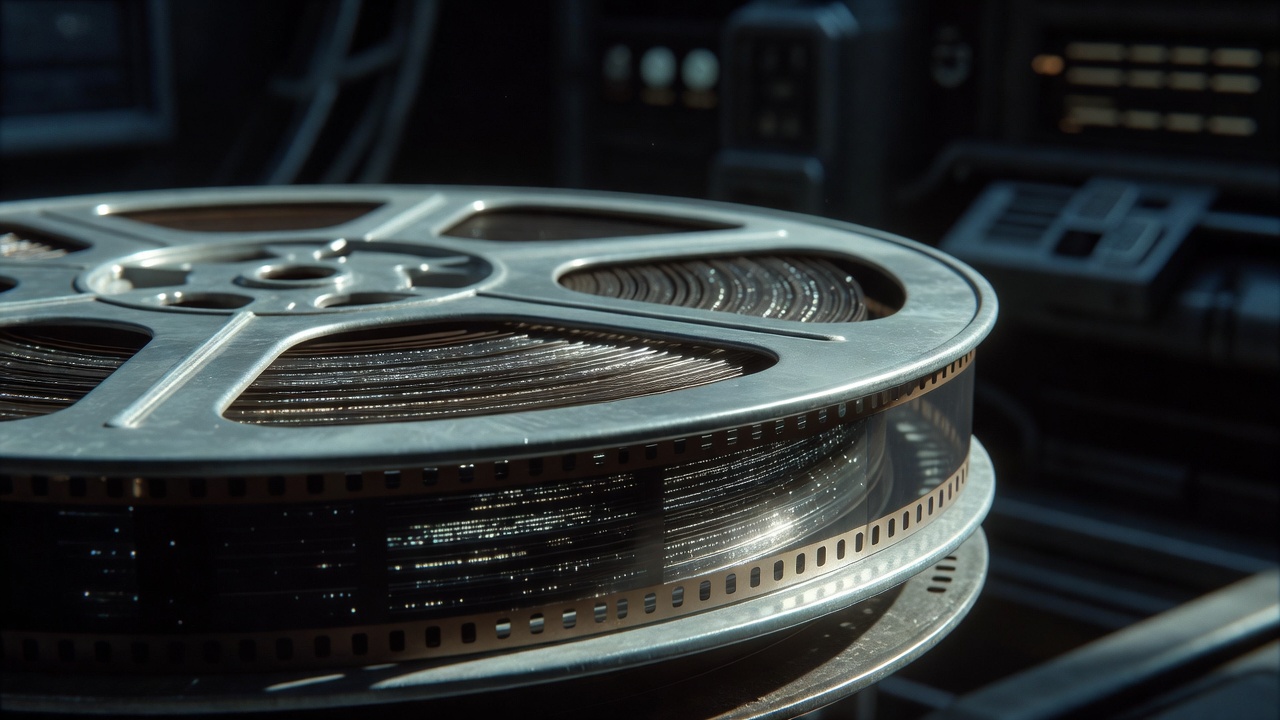
In an era dominated by hyper-clean digital sensors and computer-generated environments, a surprising counter-movement has taken firm root among premier science fiction directors. Rather than embracing ultra-crisp 8K digital clarity, filmmakers like Christopher Nolan, Denis Villeneuve, and Panos Cosmatos have insistently chosen photochemical 35mm and 65mm film stock.
The Tactical Reality of Organic Noise
Digital camera sensors capture light on a static grid of pixels. When light hits digital sensors, the resulting noise is uniform, mathematical, and visually flat. Photochemical film, by contrast, relies on silver halide crystals suspended randomly in gelatin emulsion. When exposed to light, these microscopic crystals shift frame by frame, creating dynamic organic motion—what cinematographers refer to as "living texture."
"Digital imagery represents precision; photochemical film represents organic memory. In sci-fi, organic noise makes alien landscapes feel like places that have actually been stepped on."
In modern sci-fi world-building, this distinction is paramount. A dystopian city rendered in sterile digital 8K often looks like a architectural CAD rendering or a video game cutscene. However, when captured through 35mm stock with a hint of Kodak Vision3 grain, the exact same digital matte painting absorbs depth, subtle highlight roll-off, and atmosphere.
Halation and Highlight Roll-off in Futuristic Lighting
Another major reason cinematographers favor analog film in futuristic settings is how film stock handles extreme light sources—such as neon signage, laser blasts, or atmospheric engine flares. Digital sensors clip highlights abruptly when blown out, turning pure white with harsh chromatic edges. Kodak film stock features a built-in anti-halation backing that allows extreme highlights to bloom softly into surrounding dark tones, yielding warm red halation rings around intense light sources.
This optical characteristic defined the visual aesthetic of seminal classics like Blade Runner (1982) and continues to define modern masterpieces. By utilizing actual optical lenses and real film stock, directors inject tactile mystery into speculative worlds.
Indexing Film Texture in CineEngine
At Vaultsproutrankltt, our CineEngine recommendation platform indexes film stock type as a core parameter. When building your movie discovery queries on our CineEngine AI Radar, you can explicitly prioritize titles shot on 35mm or 70mm film stock to match your visual aesthetic preferences.